Spring and summer often bring the desire to refresh our homes. Longer days, brighter light, and more time spent entertaining naturally inspire many homeowners to rethink how their spaces feel and function.
Open-concept homes, while beautiful and practical, can be surprisingly challenging to design. A family room, kitchen, and breakfast area all share the same visual field. If these spaces are not thoughtfully coordinated, they can easily feel disconnected or unfinished.
In this recent makeover, the goal was to create a contemporary home that felt vibrant, artistic, and deeply personal—while still remaining comfortable and welcoming for everyday living. By layering warm neutrals with expressive colour and carefully updating key elements throughout the space, the result became a joyful retreat full of personality.
If you are considering a seasonal refresh of your own open-concept space, here are several ideas that can make a meaningful difference.
Start With a Warm, Flexible Colour Palette
A successful redesign often begins with colour.
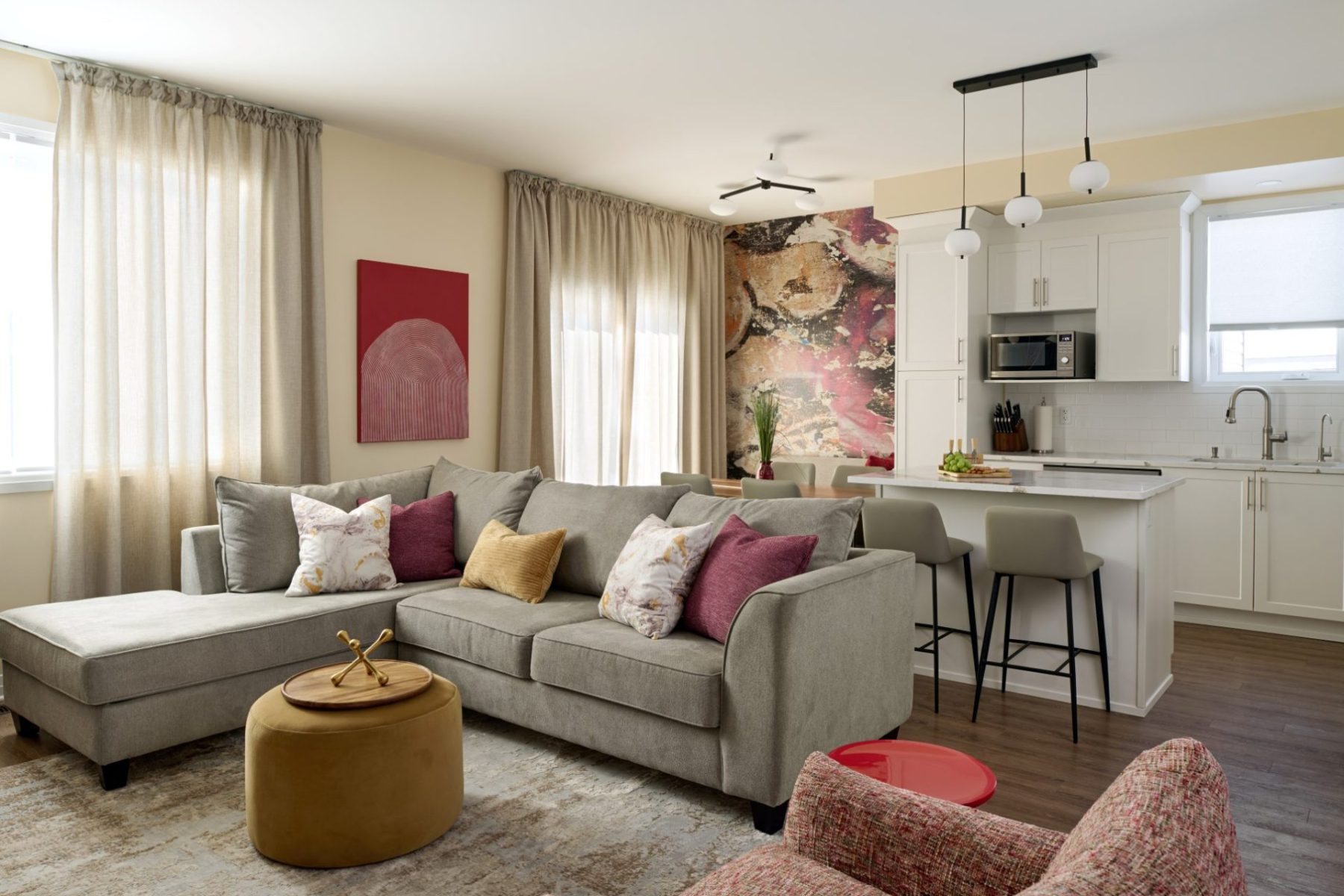
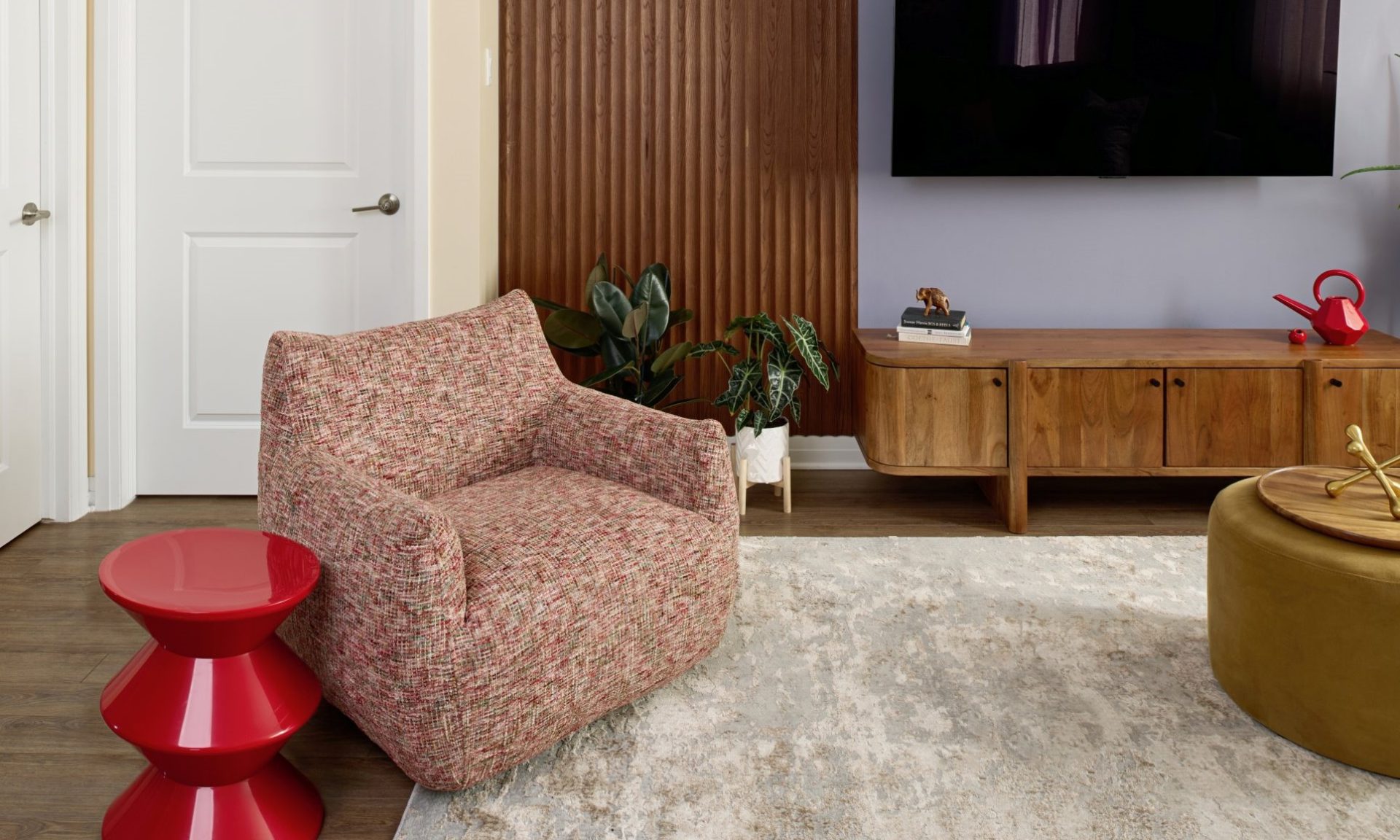
In this home, the foundation was built on warm neutrals, such as soft greiges and beiges with a yellow undertone that create a calm, elegant backdrop. These tones allow the architecture and furnishings to feel cohesive while providing flexibility for more expressive accents.
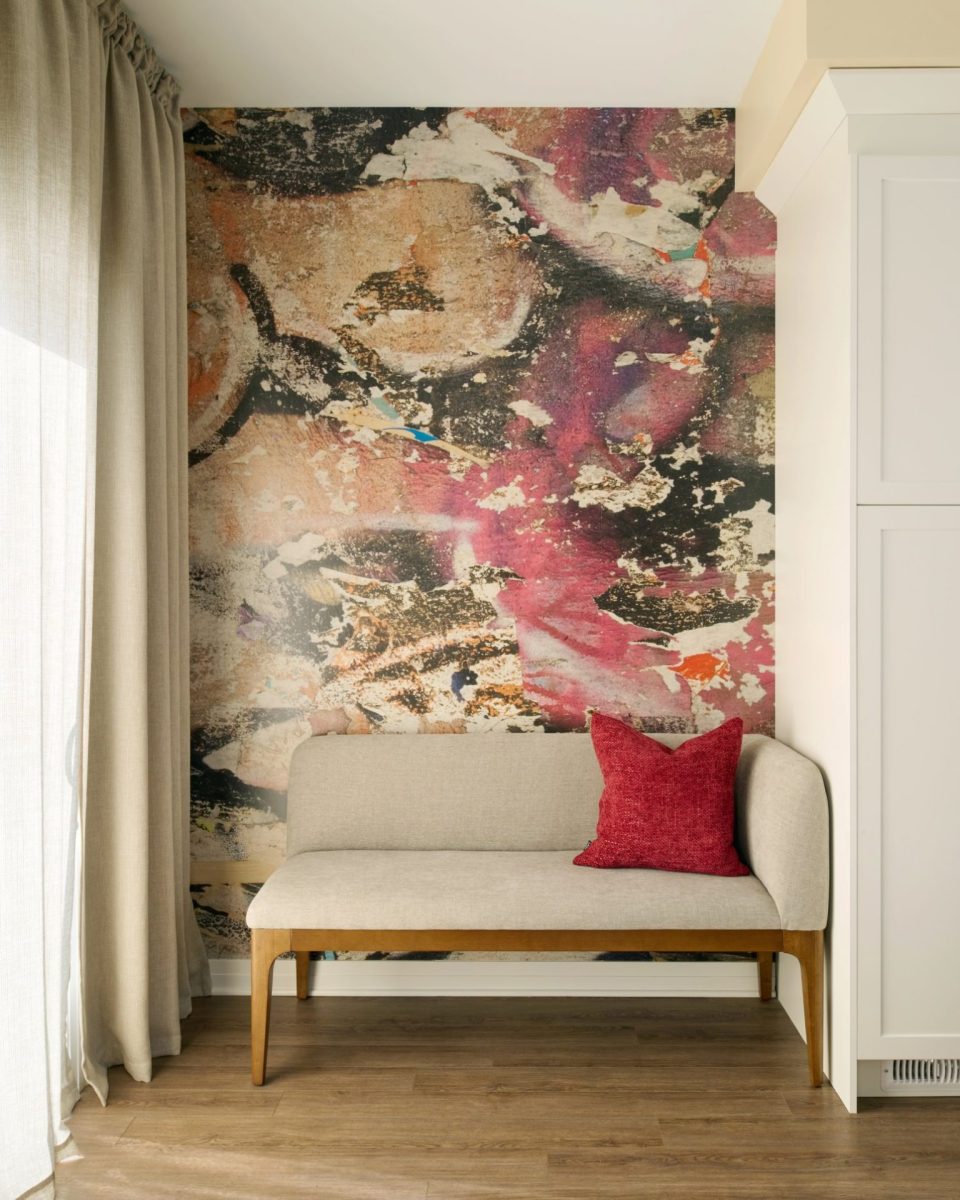
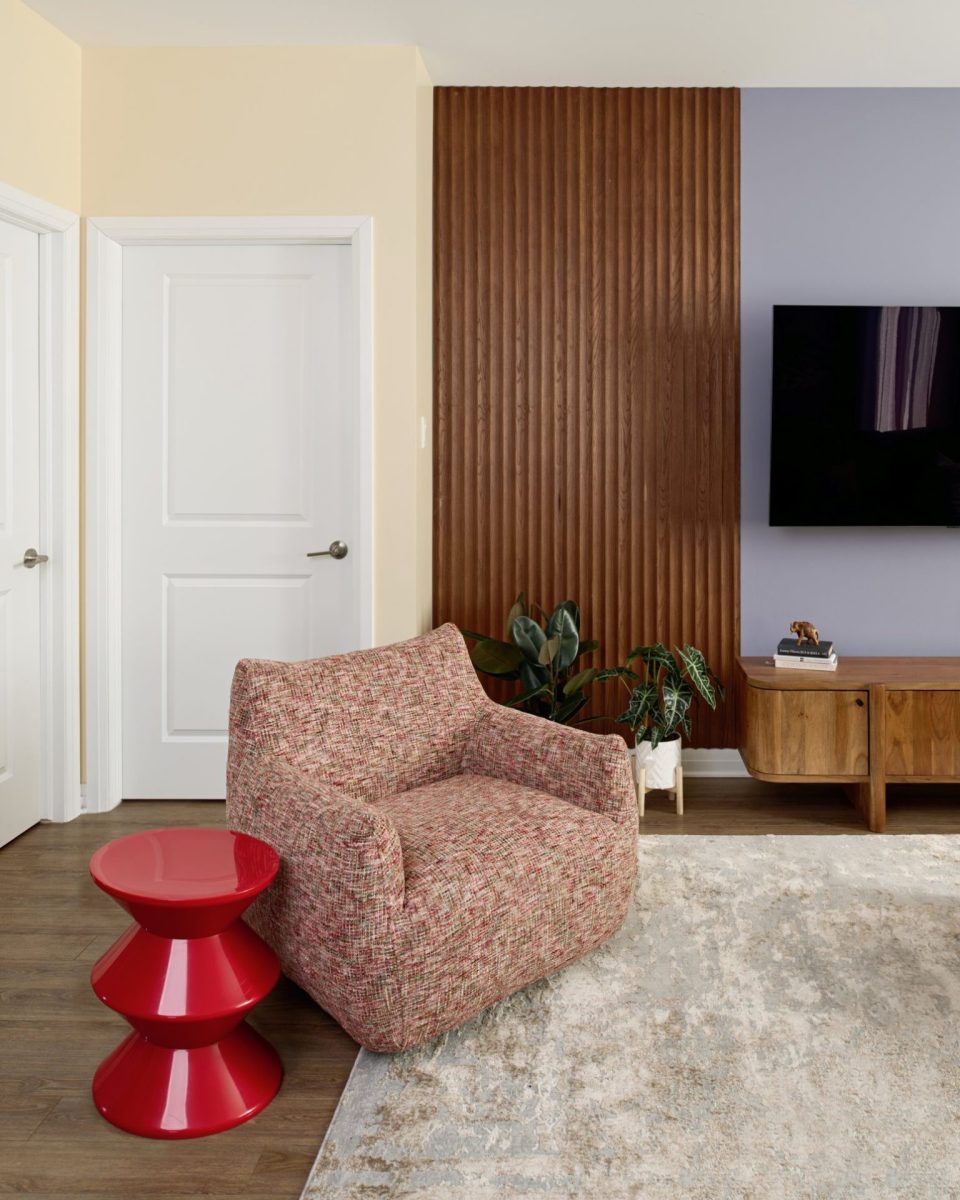
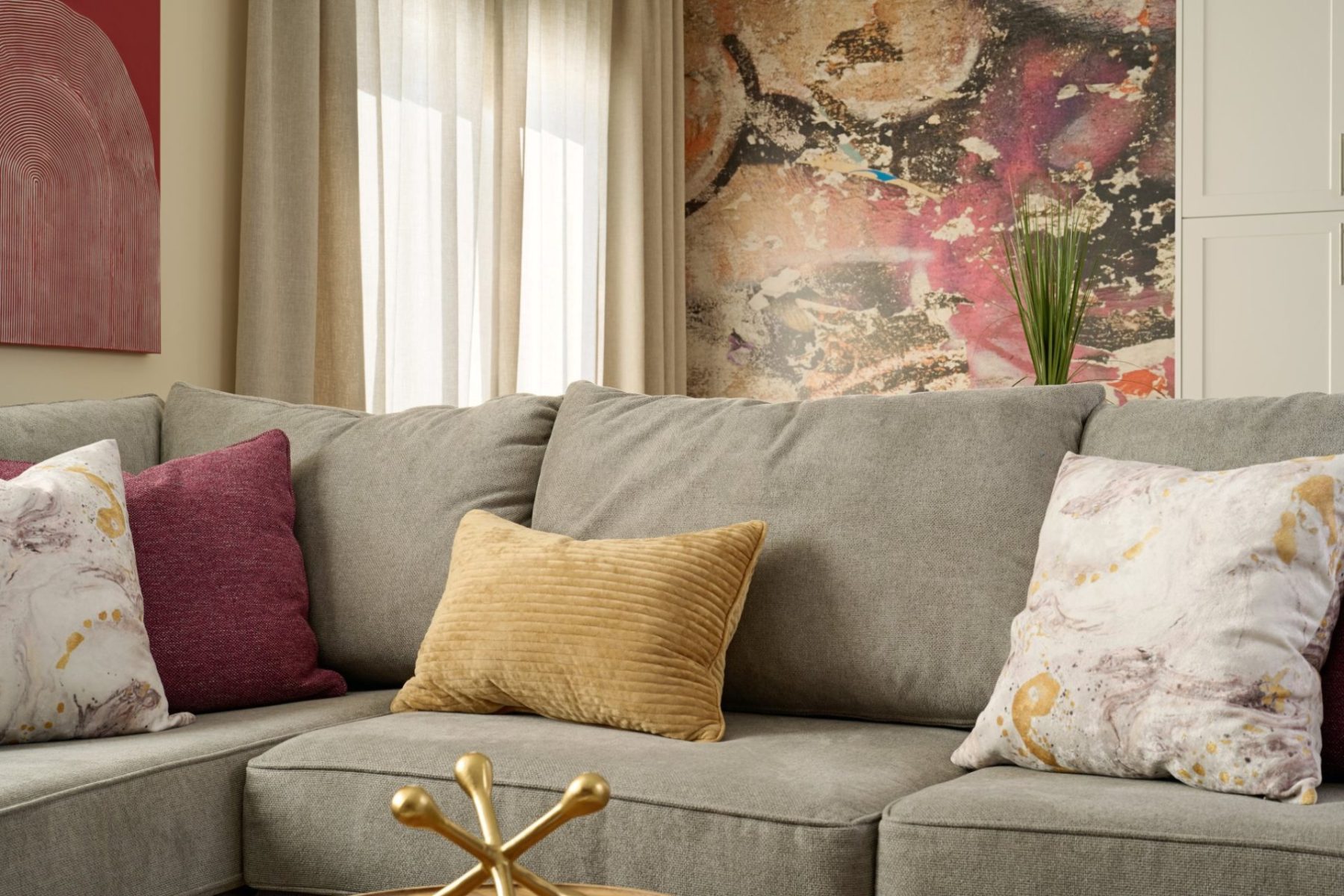
Once that neutral base was established, colour was introduced intentionally. Touches of yellow brought brightness and optimism. Rich red added warmth and depth. A hint of purple created a slightly unexpected artistic note.
The key to using multiple colours successfully is balance. Rather than spreading them evenly throughout the room, it is often more effective to let each colour appear in curated moments through textiles, art, or accessories, so the palette feels lively but still composed.
Refresh the Furniture to Redefine the Room
Furniture is often the element that visually anchors an open-concept space.
Replacing a few key pieces can instantly transform the atmosphere of a room. In this project, new furnishings helped establish a more contemporary feel while improving the overall layout.
When selecting furniture for open-concept living areas, it is important to consider the traffic flow of the space and how pieces look from multiple viewpoints. The sofa might be seen from the kitchen island, the breakfast table, or the entryway.
Clean lines, comfortable proportions, and cohesive upholstery choices help maintain visual harmony while ensuring the space remains relaxed and livable.
Upgrade the Kitchen’s Visual Anchor
In many open-concept homes, the kitchen becomes the natural focal point.
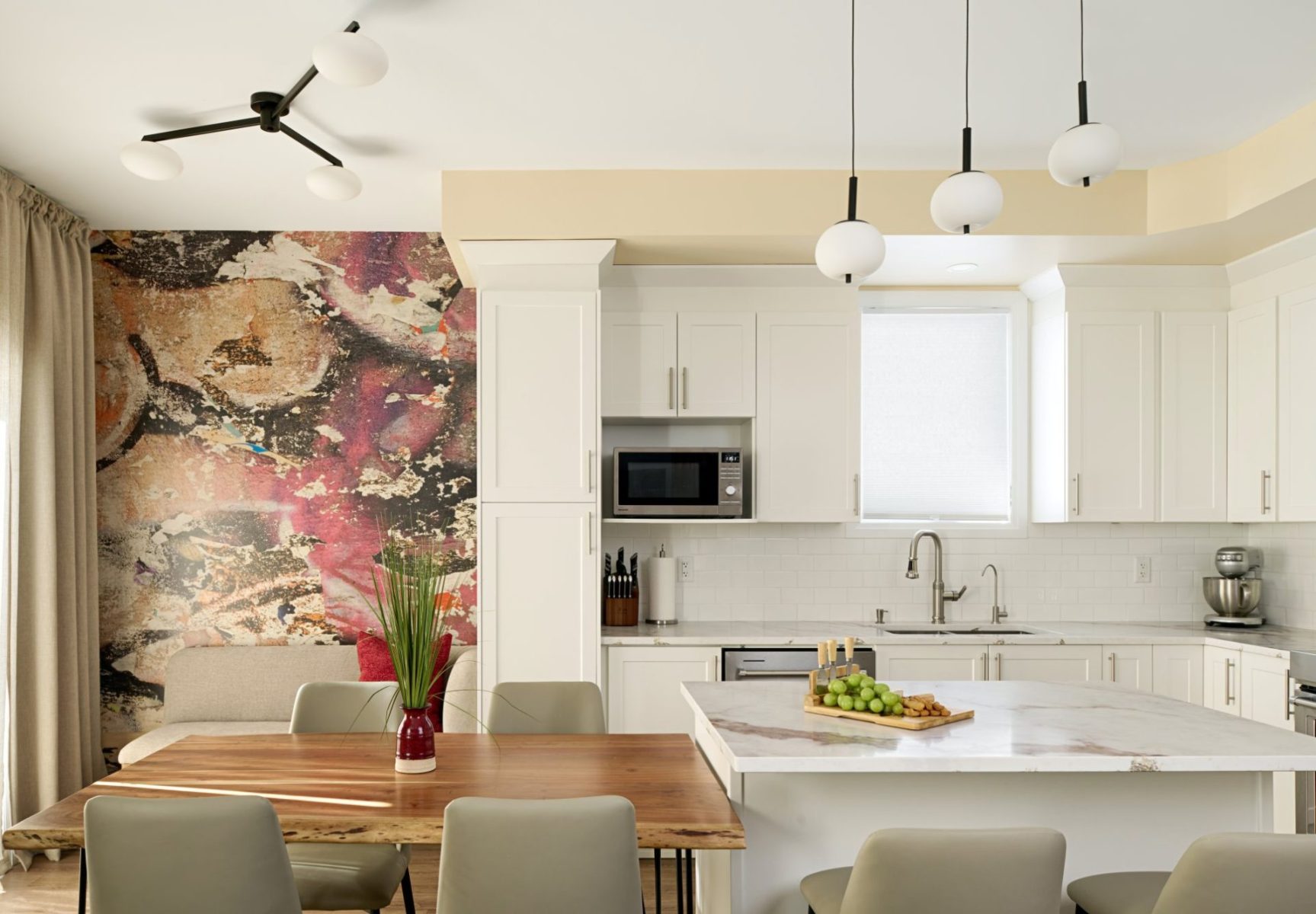
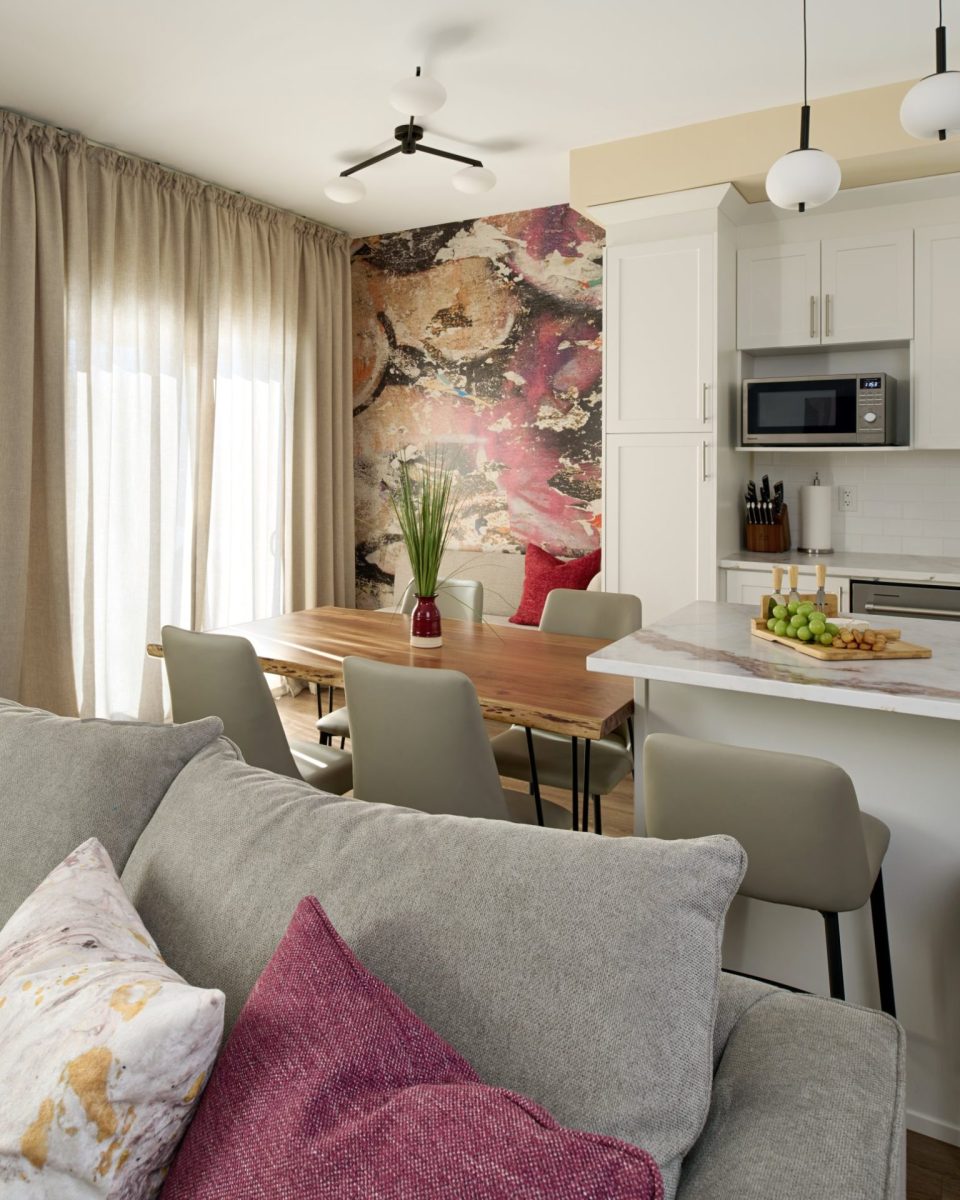
One of the most impactful updates in this makeover was replacing the kitchen countertop. A new surface can instantly elevate the kitchen and bring the entire space together visually.
When selecting materials, it is helpful to think beyond the kitchen itself. The countertop should complement surrounding furniture, flooring, and colour palettes so the entire open area feels intentional rather than segmented.
This small change often delivers a surprisingly large transformation.
Reimagine Lighting Across the Space
Lighting plays an essential role in shaping how an open-concept room feels.
In this project, updating the light fixtures created a fresh contemporary atmosphere while improving functionality throughout the space.
Layered lighting is particularly important in large open areas. Pendant lights define the kitchen island, a statement fixture anchors the breakfast table, and softer ambient lighting keeps the family room comfortable in the evenings.
Thoughtful lighting design helps visually connect each area while giving every zone its own sense of purpose.
Elevate the Windows With Elegant Treatments
Window treatments are often underestimated, yet they have a powerful effect on the overall feeling of a space.
Well-chosen curtains soften architectural lines and bring warmth into contemporary interiors. In this makeover, new window treatments helped frame the space while complementing the refreshed colour palette.
Hanging curtains slightly higher, closer to the ceiling, creates an immediate sense of height and elegance. Fabric selection also matters. Textures that feel light and natural allow sunlight to filter beautifully into the room.
The result is a space that feels both polished and inviting.
Layer Art and Decor to Tell a Personal Story
Once the larger design elements are in place, decor becomes the final layer that gives a home its personality.
Artwork, decorative objects, textiles, and books were carefully curated to bring colour and artistic character into this home. Rather than filling every surface, the approach focused on thoughtful composition and balance.
A few well-chosen pieces often create far more impact than many small accessories.
This stage of the design process is also where a home begins to feel deeply personal, reflecting the interests, memories, and lifestyle of the person who lives there.
Let's Stay Connected!
Subscribe to my newsletter for exclusive design insights, curated inspiration, and first dibs on upcoming events. You’ll also get a peek behind the scenes — because beautiful, elevated spaces don’t just magically happen, even if it sometimes looks that way.
Stay connected, stay inspired — and bring fresh ideas home.